Anfiteatro Flavio (El Coliseo)
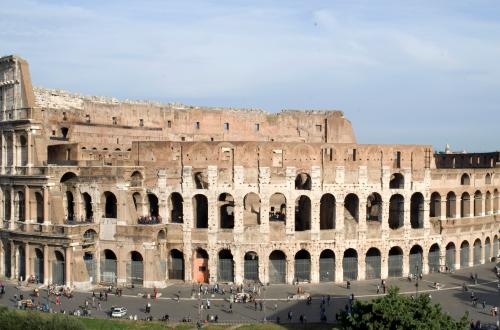
Anfiteatro Flavio (El Coliseo)
Monumentos
 Condividi




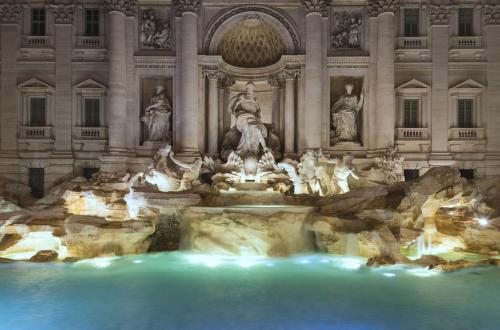
La más famosa de las fuentes romanas: una joya de agua y piedra
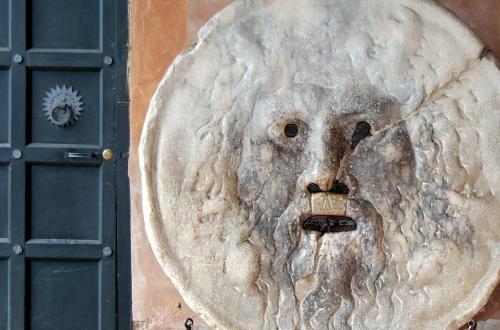
Según la leyenda, la historia de Roma comienza aquí

An unmissable opportunity to plan your own future in the field of Fashion
Rome is a perfect destination for tourism and in particular for school trips

The inestimable artistic heritage of Rome is the preferred destination for the many students who decide to benefit from the many cultural opportunities that the city offers
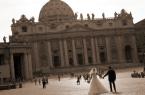
Rome is the perfect choice for a romantic and refined wedding, enriched by a millenary history

Tradition, sartorial mastery, and innovative technologies in a unique setting
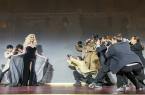
Glamour, myth and beauty: a city where even fashion is a legend
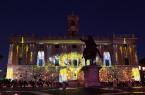
Beauty and art, magnificent spectators of a thousand-year history
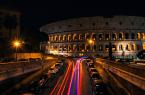
The endless opportunities for fun in Rome
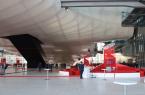
Rome is the ideal destination for Tourism Business

Presentati al Convention Center La Nuvola i risultati di FUTOUROMA
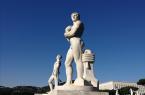
How and where to see live sporting events

Come e dove allenare corpo e mente nella seconda capitale più verde d'Europa
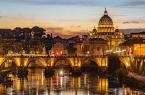
History, fascinating facts, and useful information to fully experience the magic of the Eternal City
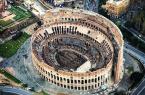

Seven unusual itineraries to discover the city from new perspectives
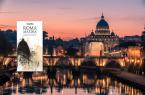
Stories, places, and secrets – a guidebook to an eternal city.

A puzzle of voices and experiences: bloggers explain Rome
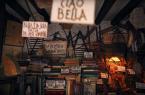
Il romanzo collettivo che dà voce alle storie di persone e luoghi di una Roma inedita
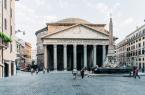
Riqueza, esplendor y magnificencia inmersos en la magia de la historia
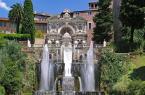
Descubre Tivoli y sus maravillosas villas


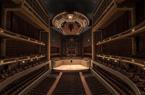

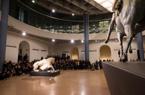

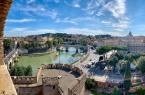
An itinerary between millenary architectures and daring contemporary visions
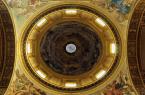
Roma, la escenografía ideal de obras maestras del cine y de grandes melodías
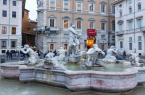
Un viaje dentro de los museos de Piazza Navona y sus alrededores

Un itinerario para conocer las atracciones imperdibles de Roma en poco tiempo

Tres días intensos para disfrutar las attracciones imperdibles de Roma
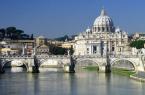
A perfect five day itinerary for an unforgettable Roman holiday

Indoor & outdoor activities and attractions

Descubre valiosas colecciones desde la prehistoria hasta el arte contemporáneo

La cocina de Roma: sabores intensos y genuinos y una fuerte identidad

El alma marinera de Roma
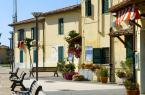
Sabores y tradiciones milenarias en un lugar donde el tiempo parece haberse detenido
This fountain was originally built in 1586 under Sixtus the Fifth Peretti (1585-1590) by the architect Domenico Fontana, as reported by the epigraph placed in the arch of the door nearby.
In 1552 pope Julius the Third Ciocchi del Monte (1550-1555) commissioned to Bartolomeo Ammannati a monumental “public utility” fountain that was built in correspondence of the rich nymphaeum inside
[...]The large statue of Marforio – the name perhaps recalling the fact that it came from the area in the Roman Forum near the Comitium called Martis forum (“forum of Mars”) – represents a river god or
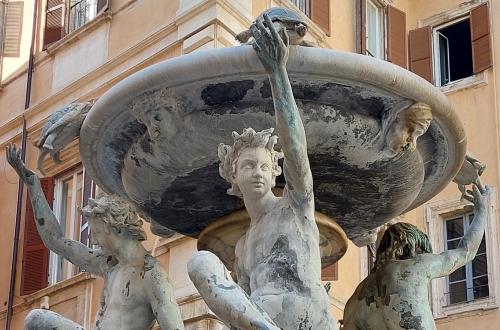
[...]Built in 1589 by Giacomo Della Porta, the fountain consists of a boat-shaped pond with a decorated shaft on a cube base that holds a basin.
The fountain in Piazza Cairoli, once called Piazza Branca, is situated at the centre of a garden. It was built in 1888 by Ed Andrè, as remembered by an engraving in a corner of the socle.
The fountain consists of a pond with an islet on which a statue of the Roman age is placed.
The wall-fountain fed by Acqua Vergine in Piazza della Cancelleria is a work by Publio Morbiducci winner in 1928 of a competition announced by the Municipality for the replacement of ten small cast
[...]Commissioned by Paul the Fifth Borghese(1605-1621) and designed by Maderno, it was built in 1614 and placed in Piazza Scossacavalli in front of Palazzo Campeggi, residence of cardinal Scipione Borg
[...]The fountain is a work by V. Cafiero and was inaugurated in 1928.
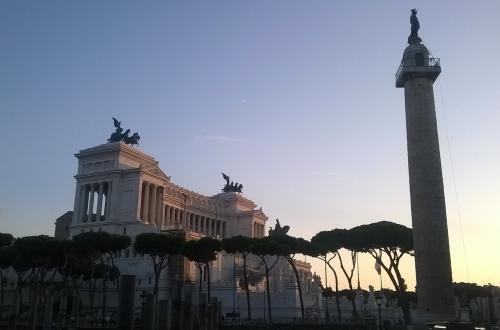
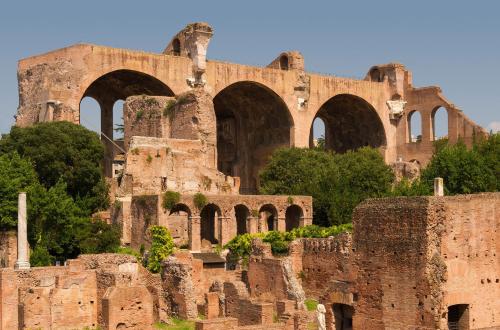
The fountain is placed at the foot of a colossal fluted column with a Corinthian capital, coming from the Basilica of Maxentius.
The fountain was originally located in Piazza Montanara near the Teatro di Marcello.
The fountain, built in 1965, consists of a low rectangular basin in the centre of which is a thermal pool in granite from the Roman period, supported by a pair of architrave fragments, also ancient
[...]The two inscriptions with the pope’s coat ofarms that dominate the fountain commemorate the building of the fountain in 1565 under Pious the Fourth Medici (1559-1565) and its restoration in 1713 un
[...]The water flows in a pond consisting of a Roman sarcophagus that receives water from a lion head.
In 1980, following the excavation of an embankment in the roadway, a large rectangular basin was brought to light, with a continuous bench against the inner perimeter walls.
This fountain is a trough leaning against the corner of a palace, consisting of a block of a denticulated frame of the Romanage, dug out in the shape of a pond. Most of the dentils are worn out.
[...]The fountain, designed by Antonio Muñoz and inaugurated in 1933, is part of the wider arrangement of the area between the Caelian and the Palatine foreseen by the town plan of 1931.
The fountain, designed by Muñoz and inaugurated in 1933, is part of the wider arrangement of the area, characterised by the Municipal Antiquarium (reopened in 1929) and the widening of the road - t
[...]The fountain leans against the left wall of the Underground (Metropolitana) Station in the middle of three large arches on the wall supporting the Velia Hill.
Surmounted by an eighteenth century aedicule, this small fountain that leans against Palazzo Torlonia reuses a Roman sarcophagus with wavy flutes.
The fountain is placed outside the rear facade of Palazzo Altieri and consists of a sarcophagus of the Roman age.
These twin fountains are similar to the works by Pietro Lombardi. They consist of three small ponds flanked by a pair of small pillars.
The fountain of the Leone (Lion) was originally situated in Via di Panico (street number 62) and was moved 60 years ago against the facade of the convent annexed to the church of San Salvatore in L
[...]This fountain, so called because it was originally fed by the Acqua Angelica, was built in 1898 by Francesco Buffa, on commission of the Municipality of Rome, on the left side of the church of S.
[...]The small fountain – a simple small pond where the water pours from the tap above – was placed ever since the sixteenth century under the existing nearby bas-relief representing a sow, on the same
[...]The fountain leans against the wall of a building and rests on two semicircular steps paved with small porphyry blocks (sampietrini) and is decorated with a rectangular granite frame that encloses
[...]This small district fountain by P. Lombardi (1927) is placed in the surroundings of the Arch of Gallienus, the ancient Porta Esquilina in the Servian Walls.
The fountain was designed by Marcelliano Mariano Ginesi and built in 1930. It consists of two pilasters resting on a base that frame the central composition.
These small fountains are made of travertine and consist of a small shell-shaped pond resting on a rock, on which a branch of a figtree is sculpted.
This ancient trough was built by Carlo Bizzaccheri in 1717 under pope Clemente the Eleventh Albani (1700-1721).
Condividi
 Condividi
 Condividi
 Condividi
 Condividi
 Condividi
 Condividi